Showing posts with label Keir Starmer. Show all posts

4 April 2012

Leveson Inquiry: Module 2 - Press/Police - Day 21

Lord Justice Leveson
"The focus of the Inquiry is ‘the culture, practices and ethics of the press’ in the context of the latter’s relationship with the public, the police and politicians. All of these matters overlap, and my goal must be to consider what lessons, if any, may be learned from past events and what recommendations, if any, should be made for the future, in particular as regards press regulation, governance and other systems of oversight."

Useful Links:
Leveson Inquiry Witness Statements HERE 
Leveson Inquiry Witness Lists HERE
Video Recordings of each day's proceedings HERE
Live Feed From Leveson Inquiry Site HERE
BBC Democracy Live Feed HERE
Telegraph Live Blog HERE
Guardian - Neil Wallis Live Blog (Monday's) HERE
Guardian - (Tuesday) James Murdoch Resigns from Chairmanship of BSkyB - Live Blog -  HERE
Guardian - Keir Starmer's Evidence to leveson Inquiry Live Blog - HERE

Module 2 


"The relationship between the press and the police and the extent to which that has operated in the public interest."
===================================================================
 Links to today's articles, information and comment relevant to the Leveson Inquiry
===================================================================
 Wednesday 4th April 2012
Link to Day 20 HERE

Today's Witnesses: ( 9:15 a.m. Start )
David Perry QC
Lord MacDonald ( Former DPP )
Keir Starmer ( DPP )

To be Read:
Karl Wissgott   Witness Statement in Full


David Perry QC


    @nataliepeck : David Perry QC led independent counsel advising CPS on prosecutions relating to "cash for honours" scandal.
    Mr Jay interviews David Perry QC via video link with Northern Ireland
    @nataliepeck : Perry instructed to act leading counsel in the prosecution of Goodman and Mulcaire, in 2006, with junior counsel Louis Mably. Jay looking through Perry's instructions from the CPS, inc. review of case, advice file, corres. from C Dowd and "vampire data" .
    Jay also looking at emails to Perry from Carmen Dowd, then head of the Crown Prosecution Service's Special Crime Division.
    Perry: If we used both RIPA and Computer Misuse Aact that was a confusing way to present the case - RIPA reflected conduct. 
    In summary, at this stage prosecution had info from mobile companies and potential victims, but nothing from Goodman and Mulcaire.
    In second conference, with investigating officers present, material had been obtained from Goodman/Mulcaire.
    Perry: Reference to 180 named targets in my notes. Don't believe I had been shown evidence but knew case went wider than 3 victims.
    Perry: Prosecution took a sample of victims to keep case manageable for all concerned and reflect the scope of criminality.
    Perry: Asked whether there was any evidence implicating any other individual employed by NI in the criminality we were looking at.
    Perry: I can't recall which officer gave reply but was was told there was no such evidence to suggest other individuals involved.
    Perry: Don't think anyone’s mind closed to possibility of decisions having to be taken, depending on evidence becoming available.  
    [Evidence of DS Philip Williams important here: he told Met in 2006 practice could be "quite widespread"
    Perry: Don't recall seeing the "For Neville" email.
    Perry: When looked at "For Neville" later, it was in isolation.
    Perry: Advised at the time focus should be on 12,300 rather than any greater sum Mulcaire received from continuing NI retainer.
    Jay asks if police officers were trying to argue for more substantial sum.
    [One assumes #Leveson pulling faces at inquiry counsel over Perry explaining points of law.]
    Perry: Defendent's lawyers arguing Mulcaire had conducted legitimate assignments for NI and retainer paid for those activities.
    LJ Leveson questions David Perry QC as to whether he ever wondered if there was much more to what was going on at the time 
    @skymarkwhite : Perry going over the decision making process with the CPS over the prosecution case against Mulcaire and Goodman. Perry aware the original phone hacking case was wider than the 3 victims on the indictment - notes indicated 180 possible targets. Perry says no evidence at time of original phone hacking prosecution to suggest it was wider than just Mulcaire/Goodman
    Perry says he doesn't recall seeing the infamous "for Neville" email at time of original prosecution 

    @IndexLeveson : Perry and Jay going through details of the decision making that led to the prosecution of Goodman and Mulcaire in 2006
    @rosschawkins : Ref in Goodman / Mulcaire prosecutors' notes to 180 victims, but prosecutor wasn't shown evidence relating to them. Perry explaining why they'd pick sample of victims for practical purposes in prosecuting, but need to reflect scale of criminality. #leveson suggests there was a far greater degree of criminality in Goodman / Mulcaire case than emerged in prosecution
    Jay quotes Mulcaire sentencing judge saying Mulcaire dealt with News Int staff other than Goodman

    @lisaocarroll : Perry: we were informed by police there was no evidence to show others at news of the world were involved Perry advice was to focus on cash payments of £12,300. (inquiry heard evidence previously Mulcaire was on £100,000 plus a year)#leveson inquiry shown note which says prosecution did not have evidence there were any other payments made to Mulcaire

    @nataliepeck : Jay asks about 2009 note. Perry: Did my best to assist in CPS attempt to recreate the state of mind that existed in 2006/2007. Perry: Drafted advice overnight based on doc from DCS Williams. If gives impression we took narrow view of the law, is incorrect. Perry 2010 advice reflects wider view would have been taken in relation to points 16-20 (not conspiracy charges). 
    Perry QC asked by Jay whether he thought the police did a good job
    @nataliepeck : Perry says he was not aware junior Met officers were concerned that some evidence was not being looked at. Perry: Found everyone working on the case highly skilled, competent and professional.

    Lord Ken MacDonald


      @nataliepeck :  As DPP, L Macdonald set up Organised Crime Division, Counter Terrorism Division, Special Crime Division+ Fraud Prosecution Service.  Jay moves straight to Goodman/Mulcaire prosecution. Macdonald: Terrorism plots overriding CPS in 2006, Peter Clarke had an enormous workload.
      Jay revisiting the particulars of the 2006/7 prosecution.
      Macdonald: Carmen would have updated me on the case as it went on.
      Macdonald: Seen material showing concern in counter terrorism dep about resources hacking investigation might consume. 
      Macdonald: Key point in April 2006 discussions was proving interception of messages took place before recipient had listened. 
      Macdonald: CPS resources had no impact on approach to case, would have prosecuted further offenders as appropriate.
      Macdonald: Visited by Nick Davies in July 2009 over 2006/7 investigation. Had limited knowledge so could not really help.
      Macdonald: I introduced a deliberate policy of deeper and broader engagement with the media, to increase public accountability. 
      Macdonald: I would meet journalists or editors for lunch or dinner to discuss our work off the record.
      Jay points out Macdonald met with almost all newspaper eds, apart from Paul Dacre.
      Macdonald: Whistle-blowing is from time-to-time in the public interest and should not face further legal impediment.   

      @rosschawkins : Former DPP Lord MacDonald says any criminal case involving Royal family is brought to attention of DPP and Attorney General.
      Then DPP MacDonald was warned in May 06 police had evidence about possible hacking of high profile individuals inc politicians & celebs. 
      CPS were aware of risk Goodman / Mulcaire lawyers might try to embarrass them out of prosecution by trying to make Princes give evidence.

      @lisaocarroll : #leveson news int told cps relevant info about financial relationship between Mulcaire and goodman would be provided voluntarily
      @IndexLeveson : Macdonald says he introduced deliberate policy of deeper, broader engagement w/ media. Macdonald: CPS is not the sort of organisation that is going to please everyone, is not in the business to do so. Macdonald says only editor he didn't meet was Paul Dacre.
      Macdonald says contact between public bodies & journalists is strongly in the public interest, adds there are obviously boundaries
      Macdonald: whistleblowing is, in my view, from time to time in the public interest & shouldn't face further legal impediment

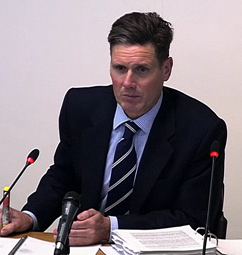
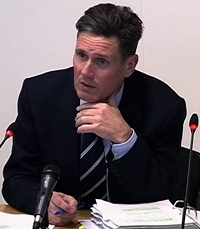
      Keir Starmer

      Guardian - Keir Starmer's Evidence to Leveson Inquiry Live Blog - HERE
        @nataliepeck : Keir Starmer, Director of Public Prosecution, back at #Leveson today. Gave inquiry short update in Feb on DPA + statutory defences. Starmer: Sam Clements replaced Dowd because he was best placed to deal with the matter.Starmer: Concerned by Guardian reporting in July 2009 and wanted to make sure CPS had made appropriate decisions.
         Starmer: Didn't want to answer questions until I at least had an appreciation myself of what had happened in 2006/7.
        Starmer: We had limited documentation and relied on MPS records of approach taken in original investigation. Starmer: I took the Yates assessment at face value. 
        Starmer: I needed to reconstruct the picture from the CPS point of view as quickly as possible.
        Jay emphasises the CPS reliance on what the Met were saying about original investigation. 
        Starmer: Home Sec wanted CPS response ASAP. Fair to say that Simon Clements was under some pressure.
        Starmer reiterates his focus was suggestion that CPS had deliberately not prescuted an executive from the News of the World.
        Starmer: Press statement went out on 16 July 2009, saying I was satisfied CPS had made the right decisions in 2006.
         
        @skymarkwhite :
        DPP Keir Starmer now giving evidence. This is his 2nd time before #Leveson His witness statement runs to more than 60pages *gulp*
        Starmer talking about review CPS carried out into original #phonehacking investigation after Guardian exclusive in July 2009

        @IndexLeveson : Starmer: I needed to reconstruct the picture from the CPS point of view as quickly as possible. 
        @rosschawkins : DPP Keir Starmer talking about response to Guardian 2009 article, reconstructing picture of CPS actions in 06. Starmer says CPS only had 40 extracts from Mulcaire diary - ( a tiny fraction of the whole ) 
        Keir Starmer speaking about John Yates' curtailment of hacking investigation
        @nataliepeck : Back at #Leveson with DPP Keir Starmer. Jay asks about documents shown to CMSSC by Nick Davies.   Starmer: My issue was whether investigation never looked at other defendants because police were unsure about proving an offence. Starmer: Asked police to send me "For Neville" email. Taken at face value, suggested author and recipient were possible suspects. 
        #Leveson suggests email could be seen as a "flag" saying "look here" or "dig more".
        Starmer: I thought "for Neville" email warranted further investigation but had "degree of pushback" from John Yates.
         
        @rosschawkins : Starmer : there was a degree of push back (from Yates) to my suggestion there shd be more investigation of For Neville email
        Keir Starmer explaining why he'd thought the 'for Neville' email was important
        Guardian Live Blog:
        Starmer says he spoke to David Perry QC, leading counsel in the prosecution of Mulcaire and Goodman, and came to the conclusion that there should be more investigation of the "for Neville" email.
         Starmer says he issued a press statement on 17 July 2009 saying the CPS was considering the "for Neville" email and would be meeting the Met's John Yates about this.
        He says when he spoke to Yates "there was a degree of pushback against my suggestion" but the two later agreed to meet on the following Monday.
        Starmer and Yates met to discuss the "for Neville" email.
        Starmer said that Perry couldn't remember having seen the email and asked if the police had considered it in 2006.
        @nataliepeck: 
        Jay taking Starmer through notes made at meeting with Yates. Yates still asserting not new material.
          Starmer: I thought the next best option was to go to David Perry for advice and Williams prepared background note.

        Guardian Live Blog:
        Starmer, Yates, DCI Philip Williams and others met to discuss the "for Neville" email.
        Starmer said that Perry couldn't remember having seen the email and asked if the police had considered it in 2006
        LJ Leveson asking Keir Starmer about his acceptance of Perry QC's advice about evidence
        Guardian Live Blog:
        At the meeting, Starmer says that he told Williams that he had understood that Perry had told a meeting on 21 August 2006 that there was no evidence of more journalists being involved in phone hacking.
        However, Starmer asked if the evidence might have suggested that the editor and other journalists had been involved.
        Starmer says he was told that emails from 2005 would have been difficult to investigate.
        Yates again stressed that the "for Neville" email was not new material and had already been seen by counsel.
        Starmer says he was "not altogether comfortable" with the impression he was being given by the meeting and wanted to ask Perry about what he had said in 2006.
        Starmer says he asked Perry to get back to him swiftly about specific questions.
        Perry gave him views about the law relating to interception (based on Williams's briefing) "for Neville" email and Starmer accepted his advice.
        Starmer says an MP wrote him a letter asking to reopen the phone-hacking case but it was not in the CPS's power to do so.
        He stresses that the reason the phone-hacking prosecutions did not go any further was not because of CPS advice.
        Starmer says he was told by Yates in July 2009 "Mr Starmer, you needn't concern yourself", but by later that year he had become concerned.
        @nataliepeck :
        Starmer: I'd asked Perry specific questions about "for Neville" and I accepted his response.
        Starmer: First instinct was email needed investigation but that wasn't an option, second option was to go to Perry.
        Starmer: Following CMS report, I felt I had exhausted the exercise with Perry – not sure what else as DPP I could do.
        Jay is now questioning Starmer on 2010, after NYT piece on hacking was published.
        Starmer: Decision to interview Sean Hoare under caution was operation decision by police. Do not know the basis.
         
        @IndexLeveson :
        Starmer says his first instinct was "flag" rather than smoking gun, hence suggesting further investigation of email
        Starmer adds investigation not an option, second option was to go to Perry

         @rosschawkins : Starmer : Yates said Gdn story showed nothing new "in confident terms"; KS became increasingly concerned about that confidence
        Mr Jay chooses his words carefully!
        @nataliepeck :
        Starmer: Don't doubt police thought they might have to prove that a message had been intercepted before it was listened to.
        Starmer: Clements note "DPP No one wants to reopen the investigation" from 2010 meeting. I don't recall what I said.
        Starmer statement referred to at #Leveson:
        Starmer: Info from Sienna Miller civil action cast some doubt on what I'd understood to be position.
        Starmer: Nothing less that a root and brach review of all the material CPS and police had is going to satisfy me about this case.
        Starmer: Indicated to (acting commissioner) Godwin we really had to roll our sleeves up and look at everything.

        @rosschawkins :
        Starmer recalls in Jan 2011 he was mindful that he was likely to be called before select committee, needed more assurance
        Keir Starmer - flagging a little?
        @lisaocarroll :
        Starmer memo on hacking early 2011: won't go away, civil litigation leading to disclosure: hard to avoid questions
         
        @nataliepeck:
        Starmer: 2011 notes of meeting - Yates says "Puts both organisations in difficult position. What did we do in 2009?"
        Starmer: Clear in mind I was going to settle for nothing less than full review of material unless somebody blocked me access to it.
        No reference should be made to part of memo document accidentally shown to court and annex.
        Starmer: CPS reveiw by Alison Levitt QC on hold and won't be published until charges decided.
        Starmer: I have taken the same approach as Macdonald to CPS.
         
        @rosschawkins :
        Starmer is having to remind Jay about questions Jay has lost. Awkward.
        Starmer : rarely do cases involving journalists come to us for consideration
         
        @nataliepeck:
        The inquiry will resume with evidence on week commencing April 23.
        That's it for module 2, althought catch-up evidence will be heard before start of mod 3.

        LJ Leveson wishes all a good Easter break

        30 March 2012

        Leveson Inquiry Witness Lists: ( Module 2 ) 2nd - 4th April 2012


        Monday 2nd April
        Witnesses Appearing:
        Mark Burns -Williamson ( Chairman, Association of Police Authorities )
        Stewart Gull ( Jersey States Police and Former ACC Suffolk Constabulary )
        Paul McKeever ( Chairman, Police Federation )
        Nathan Oley ( Head of Press and Public Affairs, Association of Police Authorities )
        Neil Wallis ( Formerly of News of the World )

        To be Read:
        T/AC Russell Middleton ( Operation Reproof, Devon and Cornwall Police )
        DCI Brendan Gilmour ( Operation Glade, MPS )


        Tuesday 3rd April
        Witnesses Appearing:
        Derek Barnett ( Police Superintendants Association )
        Dr Rob Mawby ( Department of Criminology, University of Leicester )
        Lucy Panton ( Formerly of News of the World )
        Ed Stearns ( Chief Press Officer, Directorate of Public Affairs, MPS )

        To be Read:
        Karl Wissgott ( Head of PNC Services, MPIA )

        14:00 - 16:30
        Directions Hearing for Module 3


        Wednesday 4th April
        (9:15 start)
        Witnesses Appearing:
        David Perry QC
        Lord MacDonald ( Former DPP )
        Keir Starmer ( DPP )


        Links to articles, comment and information relevant to the Leveson Inquiry:
        Saturday, March 31st:
        Sunday, April 1st:


        8 February 2012

        Leveson Inquiry: Hearings - Day 39

        LEVESON INQUIRY:CULTURE, PRACTICE AND ETHICS OF THE PRESS

        "I want this inquiry to mean something", not end up as "footnote in some professor of journalism's analysis of 21 century history." LJ Leveson in reply to A Rusbridger's submission to Inquiry.

        Lord Justice Leveson
        From Guardian:
        Here's a quick reminder of the four modules within this first year of the inquiry.
        Module 1: The relationship between the press and the public and looks at phone-hacking and other potentially illegal behaviour
        Module 2: The relationships between the press and police and the extent to which that has operated in the public interest
        Module 3: The relationship between press and politicians
        Module 4: Recommendations for a more effective policy and regulation that supports the integrity and freedom of the press while encouraging the highest ethical standards.

        Leveson Inquiry Witness Statements HERE
        Witness list for this week (6th - 9th February) to be found HERE 
        Video Recordings of each day's proceedings HERE
        Live Feed From Leveson Inquiry Site HERE
        BBC Democracy Live Feed HERE 


        -------------------------------------------------------------------------------------------------------------------------------------

        Today's links to articles, info and comments relevant to the Leveson Inquiry (frequently updated) :
        Alastair Campbell, the former No 10 communications director, has just released this statement on his phone-hacking settlement at the high court this morning:
        This is a satisfactory outcome, for which I thank solicitor Gerald Shamash and QC Jeremy Reed, and I am particularly pleased that News Group have also undertaken to continue searches of other "documents in its possession", so that I can ascertain the extent of any further wrongdoing, both for the time I worked in Downing Street and since, and they have agreed I "may be entitled to further damages in certain circumstances".
        This is not, and never has been, about the money, with which I shall be making donations to various organisations including the Labour party, Leukaemia and Lymphoma Research, Mind, Rethink Mental Illness, Comprehensive Future, Local Schools Network and Clarets Trust, so that at least some small good for the causes I believe in can come out of the criminality and cultural depravity of others.
        For me, this has been about people with a voice and a platform using them to change the media culture which, as I argued at the Leveson inquiry, has become putrid in parts. We have seen plenty of that exposed at the inquiry. It took John Prescott and others to expose police wrongdoing in their handling of phone-hacking. It has taken lots of other public figures to expose the full extent – so far – of wrongdoing by the News of the World. And it took the revelations about Milly Dowler to create the tipping point that forced the government finally to set up an inquiry into press standards, something which, as I have said before, Labour should have done.
        Where this all leads is anyone's guess. But the debate has to be kept alive and at the front of the public mind once Leveson concludes. There are already signs that the Tory ministers in particular are not keen on going along with major reform of the regulatory system if that is what the Inquiry recommends. They prefer the remarkable level of media support they currently enjoy to acting in the national interst to improve the level of debate, and the standards of the media.
        It is incumbent upon all who for whatever reason are in this debate about press standards, and the relationship between press, politics and public, to keep fighting for the full truth about the nature of the modern media to be exposed, and for something better to be put in its place in terms of ownership, standards and regulation.

          alan rusbridger
          9 more cases settling. Coogan 40k. Hughes 45k Sky Andrew 75k. 5 new cases filed. C Church fights on
          • From Guardian Live Blog: 2:48 p.m.
          Ben Fenton, the Financial Times media correspondent, pretty well sums up the ongoing exchange between Starmer, Robert Jay QC, and Lord Jusice Leveson:
            -------------------------------------------------------------------------------------------------------------------------------------


            Wednesday 8th February 2012
            ( Link to Hearing 37 HERE )


            Today's Witnesses:
            Helen Belcher ( Transmedia Watch )
            Carla Buzasi ( Huffington Post )
            Martin Moore ( Media Standards Trust )
            Will Moy ( Full Fact )
            Paul Staines ( Guido Fawkes Blog)
            Keir Starmer ( Director of Public Prosecutions )
            Pam Surphlis ( SAMM NI )


            Carla Buzasi


            Ross Hawkins
            Barr describes the Huffington Post as a "Sunday newspaper every day" - not a bad strap line

            Jonathan Haynes
            HuffPoUK had 4 million unique browsers in December, tells

            Hacked off
            Buzasi: one of the things that make HuffPo unique is that we open that blogging platform out to a wide range of people


            Guardian Live Blog:
            Buzasi says that Huffington Post UK is covered by the British jurisdiction and that it is a member of the PCC.
            Huffington Post UK editorial guidelines are framed around the PCC code, Buzasi tells the inquiry.

            Ross Hawkins
            at : don't ever use subterfuge to get stories

            Ross Hawkins
            at : 20 journos at HuffPo UK
            Guardiian Live Blog:
            Buzasi says that Huffington Post UK would publish a one-source story but questions would be asked about its provenance.She would expect to know the source if appropriate, she adds.
            Huffington Post UK journalists are instructed to give the right to reply to the subject of stories.
            Buzasi says she does not envisage that her 20 UK journalists will use subterfuge to obtain stories. They have also never engaged in phone hacking or blagging in the pursuit of news, she adds.
            The Huffington Post publishes curated content, says Buzasi – for example, when the phone-hacking scandal escalated last July, the site's front page splash linked directly to the Guardian, which broke the story.
            Huffington Post UK has terms and conditions for its bloggers – but no editorial control, Buzasi says.The website does permit anonymous blogposts, but will "strongly encourage" them to use real identities.
            The majority of the website's user comments are not pre-moderated, she says, but a filter tool will flag up potentially offensive content.

            Ross Hawkins
            at : has a "send a correction" button at bottom of every article

            IndexLeveson
            Buzasi: "It’s important that we have a robust notice and takedown process" - hence send a correction button at end of every post  

            Philippa Thomas
            Carla Buzasi of tells "digital websites are the future of media in this country" & must be part of this debate

            Ross Hawkins
            at : if a mummy blogger wants to start a blog in their bedroom shouldn't tie them up in paperwork

            IndexLeveson
            Buzasi suggests that some news organisations don't buy into the PCC because they don't hold it in high regard

            Josh Halliday
            Funny. The PCC classes Huffington Post UK as "regional press" because it could not find a suitable category for them, editor says @

            Ross Hawkins
            says uk is in a "rather unique" position...
            Guardian Live Blog:
            Buzasi says that mandatory membership of the new regulator "has its issues"."The body that the press is answerable to … shouldn't be bound by that. It shouldn't be legally binding," she adds.
            Buzasi says that mandatory membership of the new regulator "has its issues".
            "The body that the press is answerable to … shouldn't be bound by that. It shouldn't be legally binding," she adds.
            Buzasi says the PCC "didn't really know what to do with us" when Huffington Post UK asked to join. She claims that the commission classes her website as "regional press" for determining its levy as it could not find a suitable category.

            Martin Moore
            Will Moy - Full Fact, Martin Moore - Media Standards Trust

            Will Moy - Full Fact Submission to Leveson Inquiry


            Ross Hawkins
            saying how interested he is in evidence from these two witnesses, particularly figs about the PCC

            Ross Hawkins
            Moy : D Express headline splash "House prices set to surge", opposite was true

            Full Fact Story on the Above D Express Article


            Laura Harding
            In Mr Moore's written submission he says "at its heart the phone hacking scandal was about abuse of power"

            Ross Hawkins
            Moore : in last decade trust in journos - tab/broadsheet/broadcast - has declined

            Hacked off
            Moore: polls more recently... there has been a decline (in people's trust) more broadly , of broadsheet and mid-market and tabloid
            Full Fact's Assessment of the Latest 'Trust in Journalism' Polls


            T Portilho-Shrimpton
            Moore: absolutely think it's incredibly important to talk about the enormous amount of excellent good journalism across the country

            From Guardian Live Blog:
            Moy has provided examples of what he describes as "wilful inaccuracy" in stories by newspapers.Jay puts forward one front-page story from the Daily Express claiming that house prices were "set to surge". However, the experts whose figures were used actually said they were to drop.
            Moy says Full Fact's job is "to play the ball not the man" and raise awareness of the issues, not make judgments about journalists.
            Moore says that the inquiry has heard clear examples of "gross intrusion across many aspects of different people's lives".
            There has been a decline in trust in newspapers across the board in the past decade, Moore claims.


            T Portilho-Shrimpton
            Moore: excellent journalism particularly at local level. Local news is struggling, but journalists work very hard

            Hacked off
            Moy: fewer than 2 in 10 people trust journalists to tell the truth

            Laura Harding
            Moy: we have spent a lot of time focusing on impact on victims and but barely touched on widespread problem of accuracy

            Ross Hawkins
            Moy : widespread inaccuracy in press is a regulatory failing

            Full Fact
            Moy: Good journalism devalued by journalism that is recklessly inaccurate

            T Portilho-Shrimpton
            Moy: it's for the industry to uphold its own standards and it's for the regulator to do the rest


            Ben Fenton
            Very powerful testimony by Will Moy of Full Fact. Not all journalism untrustworthy, but enough so doesn't make sense to trust it.


            T Portilho-Shrimpton
            Moore: we have three projects very focused on online media, specifically to give people more tools to make more informed judgments

            Ben Fenton
            Moy adds trust in journalism is v important for society.Describes"reckless inaccuracy"which can be addressed by regulation, not law.

            T Portilho-Shrimpton
            Moore: makes sense public should be given opportunity to know if something is inaccurate and intrusive or misrepresentative


            From Telegraph Live Blog:
            Media Standards Trust runs the website Journalisted which lists journalists and their work. It helps the public track, contact and challenge journalists and their work.
            Moore says the sourcing of work is "very poor", and journalists decline to link to original sources online.
            MST also runs Churnalism - a site that allows the public to see how much of a news story is comprised of press release material.
            Moore says a regulator should focus on "process, not content".

            Hacked off
            Moy: we've only ever had one case where our view was that there was an inaccuracy that was not accepted (by newspaper)

            Ross Hawkins
            Jay citing Moy evidence - some papers accepted error in 1 case reasonably speedily others dragged feet, others denied it altogether

            Ben Fenton
            On corrections, FT have been pretty constructive responding to us.FT is an exception among daily newspapers.

            Ben Fenton
            Guardian often good, but also an example of why readers' editors not a panacea. Can be long delays or complaints "drop off radar"


            T Portilho-Shrimpton
            Moore:... and could neither judge the PCC nor judge the newspapers who had either breached or not breached the code

            T Portilho-Shrimpton
            Moore: in 2010 of the over 6,000 original complaints, many of which we know fall off, only ones available to analyse are 526

            T Portilho-Shrimpton
            Moore: when I met with two members of the PCC was told resolution figures were different to ones given by Stephen Abell at

            T Portilho-Shrimpton
            Moore: in all my experience, the PCC secretariat have been extremely helpful, worked amazingly hard

            T Portilho-Shrimpton
            Moore: without having the data, without knowing, it's impossible to do that (analyse effectiveness of PCC)

            Ross Hawkins
            Moy accepts "call a statistician!" isn't a commonly issued cry -


            Lee Durbin
            "Famously, the average person has one testicle, but that doesn't tell you very much." - Will Moy at on bad PCC data.

            T Portilho-Shrimpton
            Moore: it would be very helpful to break down who takes a very long time and try to work out why that is

            IndexLeveson
            Moy: a timeframe on dealing with complaints is something we regard as vital having been led down the merry path many times

            Richard Peppiatt
            Will Moy and Martin Moore are coming across v eloquently & convincingly. seems to have a lot of time for them.

            Hacked off
            Moore: at time when MST (published report on PCC) it was absolutely not accepted. not accepted by PCC who attacked the report

            Editors' Code of Practice Review - Full Fact Submission


            Hacked off
            Moore: many editor have told inquiry they're very proud to have only had limited number of upheld adjudications against them

            Gavin Freeguard
            The PCC complaints made by Mr Stephen Nutt, currently being discussed by at

            Guardian Live Blog:
            Moore suggests that the PCC airbrushes the picture on complaints because the number of upheld adjudications is very low – but he claims the number of resolved breaches are very high.
            In one case, the Daily Mail was unilaterally planning to run a correction in its newspaper two days before the PCC was due to release a formal adjudication, Moy tells the inquiry.He says he found this out from a member of the PCC complaints team. This was planned shortly after the Daily Mail introduced its new page 2 complaints and clarifications column.
            "This absolutely sums up the weakness of the PCC in that sort of situation," he says. "There is a sense that newspapers can play games with the PCC and the PCC can't do much about it."

            Ben Fenton
            Moy to : user experience of PCC is defined by the newspapers. PCC doesn't intervene enough.

            T Portilho-Shrimpton
            Moy: one reason we need regulation is to counter act market failures (commercial pressures)

            Guardian Live Blog:
            In one case, the Daily Mail was unilaterally planning to run a correction in its newspaper two days before the PCC was due to release a formal adjudication, Moy tells the inquiry.
            He says he found this out from a member of the PCC complaints team. This was planned shortly after the Daily Mail introduced its new page 2 complaints and clarifications column.
            "This absolutely sums up the weakness of the PCC in that sort of situation," he says. "There is a sense that newspapers can play games with the PCC and the PCC can't do much about it."

            Philippa Thomas
            Willful inaccuracy in journalism is like poisoning the water supply - angry idealism from witness Will Moy.

            T Portilho-Shrimpton
            Moore: how can we give the privileges that are currently given to mainstream journalism to anyone who's doing journalism?  

            IndexLeveson
            Moy: Part of the way to deal with free speech problem is for society to be active in challenging misinterpretations

            T Portilho-Shrimpton
            Moore: the MST has formed a review group to look at new form of regulatory system. Planning to submit report to inquiry in May

            Ross Hawkins
            says provisional advice he's had suggests you couldn't use VAT rules to benefit / punish papers who do / don't sign up to regulator

            Hacked off
            Moore: if you tell people if they don't come into the system then they can't publish that's detrimental to freedom of speech


            Guardian Live Blog:
            Moore says the Media Standards Trust has formed a review group on regulation, and plans to submit its report to Leveson in May. However, its initial view is that it would prefer a voluntary system in the first instance, possibly with statutory or non-statutory incentives to comply. He adds that there are three "levers" that could get people to comply: legal, fiscal (foe example VAT incentives), and access to information (as suggested by Daily Mail editor Paul Dacre earlier this week)

            IndexLeveson
            Moore: If regulation is to be voluntary, it has to be incentivised enough, so that the people you want to be inside are inside

            T Portilho-Shrimpton
            Moy: been a bit dismal watching a sort of binary debate between statutory and non-statutory and that seems fairly useless

            T Portilho-Shrimpton
            Moy: we want to coin a phrase "we agree with Lord Leveson" (on unnecessary binary debate)

            Guardian Live Blog:
            Moy says there is a tendency for the debate about regulation to descend into a "binary" battle between supporters of statutory and non-statutory approaches. He adds that it is simplistic to say anything involving statute is terrible. A more fulsome debate would be about how exactly to achieve the aims of the inquiry, he says.
            Moy says it is "wrong" that the PCC code of practice is a strong document. From the point of view of the complainant it is "actually very tricky" and "obscure", he claims.
            Journalists and editors have lined up at the inquiry to praise the basic tenets of the PCC's code of practice.
            Moy complains that there is no standard of proof in the code, describing it as an "extraordinary lapse".

            Richard Peppiatt
            Moy: Ambition lacking is for journalists to provide the best avail version of the truth. Too often letter, not spirit, of law.

            Joseph O’Leary
            Moy: A complaints-handling body pursues the complaint; a regulator pursues the problem

            Richard Peppiatt
            Moy: Current regulation assumes good faith on the part of newspapers which is not always there.

            T Portilho-Shrimpton
            Moore: it's just extremely important to continue to emphasise there's an opportunity to defend journalism in the public interest

            Full Fact
            Here is an example of bad information directly influencing a live policy debate:

            Richard Peppiatt
            Moy: Real harm is done by inaccuracy - it undermines policy, spreads cynicism & causes real hurt to groups of people.


            Ben Fenton

            Moy says inaccuracy does real harm to public life. Moore urges not to go down path of Calcutt and other royal commissions.

            Hacked off
            asks Martin Moore to keep in touch with Lord Hunt about new PCC proposals
             
            Paul Staines


            Parliament Questions Bloggers on Privacy and Injunctions - Video - 14th November 2011

            Witness Statement #1 in Full
            Witness Statement #2 in Full


            Ross Hawkins
            starts by noting views come from a v different perspective from others

            Ross Hawkins
            explaining he stood down original request for to attend because statement he posted didn't come from inquiry

            From Guardian Live Blog:
            David Barr, counsel to the inquiry, reads out Staines's "diverse career history," including a stint as a bond dealer, a professional gambler and an organiser of "mass attendance dance events, or raves".

            Hacked off
            Staines: current readership daily, 50 to 100,000

            T Portilho-Shrimpton
            Staines: I think the BBc Mark Thompson explained that we beat them

            Ross Hawkins
            at - we have great fun teasing our media rivals

            T Portilho-Shrimpton
            Staines: I do mainly political journalism and quite often they (other journos) will stick the knife into each other via me

            Ben Fenton
            Journalists have very thin skins. Only people who have come forward to are those without careers, Guido says.

            Ross Hawkins
            at - confirms inspirations are Kelvin MacKenzie & Popbitch; "MacKenzie is our lodestar"

            T Portilho-Shrimpton
            Staines: Camilla, boss of Popbitch is a friend, has given me advice over the years. Kelvin MacKenzie is our lodestar

            IndexLeveson
            Staines: People who are still in the business of journalism are reluctant to admit what has been going on re: hacking, blagging 

            Ross Hawkins
            at - with career ending story or story of great import would be reluctant to lob it in

            Hacked off
            Staines has a smaller independent American entity hosting his website from the US

            Ben Fenton
            Guido says this is partly to stop UK authorities from getting at him. don't want website to disappear because of spurious threats. 


            IndexLeveson
            Staines: will publish single-source stories if they are of no consequence, but would be reluctant if a "story of great import".

            Ross Hawkins
            Barr : you were deciding to thwart what the court was trying to achieve; yeah  

            Ross Hawkins
            at : I'm a citizen of a free republic & since 1922 I don't have to pay attentn to what a British judge orders me to do
            Guardian Live Blog:
            Staines is asked about the Ryan Giggs privacy injunction.
            He says that he suggested on Twitter a five-a-side, including Ryan Giggs, and two managers to oversee the team "but nothing came of it".
            Barr asks about WikiLeaks and a Guido Fawkes post in 2008.The post was a show of support to WikiLeaks in relation to a leaked memo about the bank Northern Rock.
            The Financial Times also received the memo but was "hit with injunctions," says Staines. The blogger then uploaded the memo to WikiLeaks and other websites in different jurisdictions around the world.
            Staines says he was attempting to thwart the court order because it involved £50m of public money.
            "What I think you're missing is that I'm a citizen of a free republic and, since 1922, I don't have to pay attention to what a British judge orders me to do."

            Emma Boon
            . described how he went against a court judgement to publish details about where taxpayers' £ went 

            Ross Hawkins
            at : about half his sources are personally known to him, 40pc can verify provenance, 10pc unknown to him

            T Portilho-Shrimpton
            Staines: we get a lot of stories coming in via email. Some of those emails don't reveal the source's names and are pseudonyms 

            Ben Fenton
            On anonymous tips, Guido says, we will make efforts to verify them, if we can.


            Guardian Live Blog:

            Barr raises an injunction brought by the former RBS chief executive Fred Goodwin.
            The Guido Fawkes blog "set out a riddle" to identify Goodwin after the banker obtained an injunction that banned his name being linked to allegations of an extra-marital affair, Barr says.


            Laura Harding
            Staines; Obviously people always have an agenda when they come to us with information

            Ben Fenton
            A lot of what politicians tell you is untrue, particularly the denials.

            IndexLeveson
            Staines: Stories come in via email without a name, or with a pseudonym - have a voicemail that people can use for tip offs

            Ross Hawkins
            at : Sunday paper journo might flag up story to site to persuade editor story still has "legs" & is worth following

            T Portilho-Shrimpton
            Staines: ethical goal is to report the truth as we see it (says in his witness statement)

            Ross Hawkins
            at : if you make a mistake your readers will lose confidence in you and your reputation will go down hill

            Ross Hawkins
            at : often get stories out within five minutes of getting basic details, but 1st printed isn't always spot on

            Ben Fenton
            We strive for accuracy rather than guarantee it. We have to work fast, but can change things fast too.

            Ross Hawkins
            at : quite common that someone who will lie to their wife will lie to their voters

            Ross Hawkins
            rather helpfully points out because writes about politicians he largely has a public interest defence

            T Portilho-Shrimpton
            Staines: I think celebrities like... Hugh Grant did put himself out in public and should expect to be scrutinised


            Guardian Live Blog:
            Staines is asked about privacy."I don't think people in public life, people paid for by the taxpayer, should expect the same degree of privacy as a private citizen can expect," he says.
            People in public life will lie to those around them because they have more to lose, he suggests.
            He says there is almost always a public interest angle when it comes to politicians, and criticises celebrities such as Hugh Grant who he says claim they are not public figures.
            Staines says the Daily Telegraph was right to use subterfuge on its Vince Cable "sting", and the PCC was wrong to rule against it.
            He claims that the story exposed Cable as saying something different in private than in public, adding that it is important to expose hypocrisy in public officials.
            Asked about phone and email hacking, he says both those are against the law and "we don't need to reform the regulation system" to deal with them.

            Ben Fenton
            Guido (Paul Staines) Fawkes says he ignores most complaints, but not when the person written about is the complainant.

            Ben Fenton
            If people make a big fuss about something trivial, we probably take it down to make them go away.

            Ben Fenton
            Guido says kitemarking is "not a road I want to go down".

            Ben Fenton
            I would have to self-censor and be politically correct. I don't want to adhere to standards Harriet Harman would approve of.


            Guardian Live Blog:
            Staines says he does not want to be part of the new system of self-regulation."Lord Hunt was very silky in his wooing of me to join some kind of kitemark system and I don't think that's a road I want to go down," he adds.
            "I would end up in a system where I would have to self censor. I don't want to have a product that is politically correct. I don't think there are many publishers around now – not even Private Eye – that are politically incorrect in the way that we are."
             

            Hacked off
            Staines: Lord Hunt is very silky in his wooing of me to join some kind of kite mark system. Not a road I want to go down.

            Hacked off
            Staines: Journalists have told me Tina Weaver had authorised them to hack and blag. She sits on the PCC and ed standards committee.

            Ben Fenton
            [Will be seeking Trinity Mirror comment on accusation by Guido that editor of Sunday Mirror ordered phone hacking]


            Guardian Live Blog:
            Staines tells the inquiry that two journalists have told him that Tina Weaver, editor of the Sunday Mirror, has ordered journalists "to hack, blag, all those things".
            "And she sits on the editors' code committee … she knows what's been going on," he adds.

            Jonathan Haynes
            Guido saying "if we premoderate comments we become legally liable for them"

            Alexander Wickham
            Staines: we already have crimes on the statute that cover phone hacking, we don't need additional regulation

            Ross Hawkins
            at : journalists are complicit in politicians lying because they've received info from those pols under "lobby terms"

            Ross Hawkins
            at : lobby system is a cartel

            Ross Hawkins
            at : downing st sources means journo sat in briefing room being fed line by pm's spokesman

            Hacked off
            Staines: It's a standard technique for press officers to give tit bits to their favourite journalists. They bring journos to heel.

            Ben Fenton
            Lobby acts like an obedience school for journalists, Guido tells Particularly bad for TV journalists threatened with access loss.

            Alexander Wickham
            Staines: as a punishment for an aggressive interview, a journalist will be denied access to a politician for six months

            Hacked off
            Staines: The only reason the expenses scandal came out was Heather Brooke spent two years pursuing it through the courts.

            Ben Fenton
            [two very senior former lobby journalists, George Jones and Elinor Goodman, are panel assessors.]


            Alexander Wickham
            Staines reveals he sold Hague gay bar photos to NOTW for 20 grand but they never published them. Wow


            Alexander Wickham
            So the implication is that Coulson and Cameron conspired to prevent publication of Hague adviser gay bar photos


            Toby Young

            delivering an overdose of truth serum to . Methinks m'lord might expire


            Michael Taggart
            Telegraph's being fingered by for allegedly using nefarious methods to track down the latter's address


            Hacked off
            Staines: We're a nation of law so that's going to have to be ultimate route that people go down [for redress over press invasion].


            IndexLeveson
            Staines: Stopping these abuses (re: Chris Jeffries/McCanns) from happening means you’ll lose the freedom of the press

            Ben Fenton
            If this inquiry doesn't act as a catalyst for prosecution of [Motorman] journalists, you will have failed, Guido tells

            Hacked off
            Staines: Huge body of evidence from Motorman, 389 journalists on the records yet nothing is happening, should be prosecuted.

            Ben Fenton
            says too late now, maybe. That something should have happened 9 years ago is a different matter & part of my remit.

            Hacked off
            Staines: There is manifest prime facia evidence of crimes, it shouldn't be ignored.

            Ross Hawkins
            asked how he got Campbell witness statement draft, source was journo thinks he got it from another journo

            Hacked off
            Staines: Was told Weaver had asked journos to "spin" a phone. Hacking info on Piers Morgan is derived from his own writing.

            Hacked off
            Staines: Received Alastair Campbell's statement from a journalist source.

            Tom Harper
            Paul Staines aka turns to press gallery, winks, and says: "Enjoy" as he departs


            Helen Belcher

            Transmedia Watch Website Transsexual people and the Press - By Christine Burns 

            Just Plain Sense - Trans People and the Media

            Submission by TransMedia Watch 


            Philippa Thomas
            witness Helen Belcher of Transmedia Watch - speaking re fair coverage of issues

            Louise Burns
            describing trans/intersex and gender definitions

            David Allen Green
            At to see submission on the vile privacy infringements trans people suffer from tabloids.
            Guardian Live Blog:
            Belcher describes "trans" as a group of people who identify with the gender opposite to that recorded at their birth. It may not mean living full time "in role" or medical intervention, she says.Intersex is where the physical biology of a person has aspects of both genders, Belcher says.
            The PCC editors' code of practice committee changed guidance on reporting of gender issues to refer to "gender" from "sex" in May 2005, Belcher says.It read:
            Press code change on gender discrimination
            A change to the editors' code of practice to cover discriminatory press reporting of transgender people is announced today.
            Individuals who are undergoing or have undergone treatment for gender reassignment will be included in the categories offered protection from prejudicial or pejorative references.
            The Press Complaints Commission, which adjudicates on complaints under the code, has always regarded trans individuals as covered by the general provisions of the Discrimination clause. However, the editors' committee – which writes and revises the code - has accepted that following the introduction of the Gender Recognition Act last year, it was appropriate that more specific cover should be given.
            It has decided that the word gender will replace sex in sub-clause 12i, thus widening its scope to include transgender individuals. It will now read:
            12i) The press must avoid prejudicial or pejorative reference to an individual's race, colour, religion, gender, sexual orientation or to any physical or mental illness or disability.
            The committee decided against a change to the accompanying sub-clause 12ii, which covers publication of discriminatory details that aren't relevant to a story, because trans individuals would be covered under the existing rules.
            Code committee chairman Les Hinton, chairman of News International, said: "The committee felt it right, in the light of the recent legislative changes on transgender issues, to specifically mention avoiding prejudicial or pejorative references on the ground of a person's gender.
            "However, publishing details of an individual's gender reassignment that were not genuinely relevant, would already be covered by the current sub-clause, since gender dysphoria is a recognised illness – and physical illness is already specifically mentioned."
            This applies both to people in a state of gender transition and also to people who have successfully completed gender reassignment, since they would have previously suffered from gender dysphoria.

            Paris ★ Lees
            Just been joined by , says PCC regarded as "a joke" by the trans community

            IndexLeveson
            Belcher: trans people don't complain about articles, because the PCC has received a number of complaints and nothing ever changes

            Hacked off
            Belcher: Press routinely misgenders people, using before and after pictures, former name and demeaning language.

            Louise Burns
            looking at specific examples, the sun in 2009, juvenile joke, use of "sex swap", "burly" pronouns

            Louise Burns
            sun's publication distress to the person concerned and family, expose no public interest, nonapproved
            Guardian Live Blog:
            Belcher is asked about a story in the Sun from 24 October 2009, headed "Dad-of-two driver changes gear in sex swap".She claims that a former partner of the subject sold the story to a weekly magazine, including the photographs. "It appears that the Sun got it from there," she adds.
            The subject of the story was not contacted before it was published by the Sun, Belcher claims. The story was written to appear as if the subject "colluded" with it.
            Belcher says "it caused her immense distress. It also caused her children immense distress because they thought she had sold her story in some way and she had nothing to do with the story. It is pure expose. It has nothing to do with the public interest."

            Philippa Thomas
            Helen Belcher of Transmedia Watch tells that headlines reducing people to "trans" only are "incredibly dehumanizing".
            Example of very recent tabloid article.
             From Guardian Live Blog:
            Jay raises articles that were put to Sun editor Dominic Mohan yesterday, including the headline "Tran or woman".She says the Sun's use of the term "tran" objectifies transgender people.
            According to Belcher, the Sun made a reference in the article to the TV programme There's Something About Miriam. But doing that "the Sun is basically saying, 'trans people illicit horror. Trans people are basically frauds'," she says.


            Louise Burns
            sun effectively saying trans people are frauds, not real,, horror stories

            Hacked off
            Belcher: Sun article "Tran or woman?" implies trans people elicit horror and are frauds. 

            Hacked off
            Belcher: The NHS have a legal duty to support trans people. It's not a lifestyle choice, it's something people are born with.

            Christine Burns
            Chances are the UK press won't report Helen Belcher's evidence to , but the hashtag stream is full of coverage

            Laura Harding
            Belcher is going through examples of articles where the subject is "misgendered" and "ridiculed"  

            Christine Burns
            Belcher: "Mail Online publishes six times more stories than any other paper"

            Press For Change
            16 years ago since that meeting with the PCC and still no action in regards to blatent untruths about trans people


            Hacked off
            Belcher: The PCC has wanted to express support but is unable to deliver on it, "washing their hands [of it] with a sense of woe". 

            Ruth Pearce
            Belcher: "individuals rarely want to pursue the case because they become afraid of future harassment" 
            Guardian Live Blog:
            Belcher suggests that the Sun has not improved its reporting of transgender issues, as claimed by Mohan at the inquiry yesterday.She refers to a recent storyincluding a reference to "Trannosaurus" and another recent headline in the Scottish Sun, "Tranny granny raids three banks".
             Tranny Granny Raids Three banks - The Sun - Scotland (mentioned by Helen Belcher)


            Tanya Bloomfield


            Hacked off
            Belcher: Individuals rarely want to pursue cases because they become afraid of future harassment.

            Christine Burns
            Counsel querying if there's a note of evidence that Peta Buscombe told couldn't chg code because of editors

            Hacked off
            Belcher: Only grounds for PCC complaint without a named individual are accuracy. This rarely addresses underlying meaning.

            Christine Burns
            Helen Belcher tells that any protection for anonymity in press coverage should not be dependent on having a GRC

            Hacked off
            Belcher: I would love to hear Sun's public interest justification for disclosing the gender transition of a lorry driver.

            IndexLeveson
            Belcher: There's a confusion between what the public might be interested in and public interest


            Christine Burns
            Helen Belcher says the byline "Daily Mail Reporter" is code for agency copy; when challenged Mail denies responsibility

            Ruth Pearce
            Belcher: economic inequality prevents trans people from challenging "well funded media companies" in the courts

            Hacked off
            Belcher: Trans people can have less access to justice as often paid less than if they were not trans. Hard to take legal action.

            IndexLeveson
            Belcher: There’s a stigma (surrounding trans people) that is a further deterrent for them to seek recompense

            Hacked off
            Belcher: We're not asking for special treatment [by the press] we're asking for the same treatment.

            Fuselit/Sidekick Bks
            Helen Belcher's evidence tells you more about the Mail and the Sun than than either paper's editor managed in their full half-days.

            Keir Starmer


            Ellen Branagh
            Starmer - there's no explicit policy or guidance relating to prosecution of journalists


            Ben Fenton
            Starmer is being asked how the CPS deals with cases (such as used in blagging) where a public interest defence is mounted.

            From Guardian Live Blog:
            Starmer says there are three types of statutory defences for journalists. The first is that there was an "express public interest" in the act; the second is statutes where there is an implied defence of public interest in terms of the right to free speech; the third concerns the Official Secrets Act.
            Jay asks if section 55 of the Data Protection Act falls under the category one defence. Starmer confirms that it does.
            The Computer Misuse Act and common law offences, such as misconduct in public office, fall under the second category.

            Ben Fenton
            Says there are both "express" and "implied" public interest defences. Distinction is about what stage CPS looks at the defence.


            Guardian Live Blog:
            Starmer says there are three types of statutory defences for journalists. The first is that there was an "express public interest" in the act; the second is statutes where there is an implied defence of public interest in terms of the right to free speech; the third concerns the Official Secrets Act.
            Jay asks if section 55 of the Data Protection Act falls under the category one defence. Starmer confirms that it does.
            The Computer Misuse Act and common law offences, such as misconduct in public office, fall under the second category.
            Starmer says that if there is a statutory defence the CPS has to be sure it can defeat it. If it is not written down in law then it is more discretionary, he tells the inquiry.
            Starmer asks about the CPS's approach to the possible prosecution of journalists.He says: "It seems to me it would be prudent to have a policy that sets out in one place the factors that prosecutors will take into account when considering whether to prosecute journalists acting in the course of their newsgathering."
            He proposes an interim policy to reflect on the existing principles but put it in one place.
            Starmer says he is "pretty sure" he has jurisdiction over offences under section 55 of the Data Protection Act.

            Ben Fenton
            Interim policy will be ready in a matter of weeks. NEWS.

            IndexLeveson
            Starmer's evidence finished. says it is "likely" he will return in due course

              Pam Surphlis


              Philippa Thomas
              Pamela Surphlis next witness (on shaky videolink) to inquiry - from Support after Murder & Manslaughter

              Philippa Thomas
              witness Pam Surphlis talking about media coverage after her father & sister were murdered in Northern Ireland in 1992

              Guardian Live blog:
              Surphlis says she set up SAMM NI primarily as a support group, but after she read "salacious gossip" about the death of her father and sister she contacted other families in the same situation.
              This resulted in a report investigating two areas: the relationship between journalists and the victims' families; and the effects of the coverage on the victims' families.


              Hacked off
              Surphlis: We've had journalists pretending to be friends of other members of the family just to get in-depth interviews.

              Hacked off
              Surphlis: Press seem to be judgemental about personal details of victims that have nothing to do with their killing.

              Hacked off
              Surphlis: A lot of families give in to giving interviews in the hope it will stop press intrusion.

              Hacked off
              Surphlis: Families don't want to know how to handle the media, because they don't want the media in the first place.


              Guardian Live Blog:
              The participants in the study found the media were "intrusive and insensitive in their approach", Jay says.
              Surphlis says journalists pretended to be family members to get interviews and went to family members' places of work to try to get detail for stories.
               Surphlis says the PCC's code relating to dealing with deaths is not "user-friendly".
              Surphlis says families also faced harassment from photographers.

              Hacked off
              Surphlis explains how to improve press codes incl. refraining from doorstepping + attending funerals and not misleading family.

              Hacked off
              Surphlis: Family should have opportunity to review accuracy of interviews before publication w/out compromising ed independence.

              Hacked off
              Surphlis: Papers should warn if planning to run stories and pics relating to death of loved one weeks, months and years later.


              Ross Hawkins
              tells Pam Surphlis of support group for those bereaved by murder & manslaughter "victims pure and simple"

              Hacked off
              Surphlis: I'm grateful to the inquiry, at least we have a voice somewhere that somebody is prepared to listen to bereaved families.

              Ross Hawkins
              asks her for copies of articles criticising her